
Can Isometric Exercise Help Lower Blood Pressure?
By Matt Pack · September 16, 2026
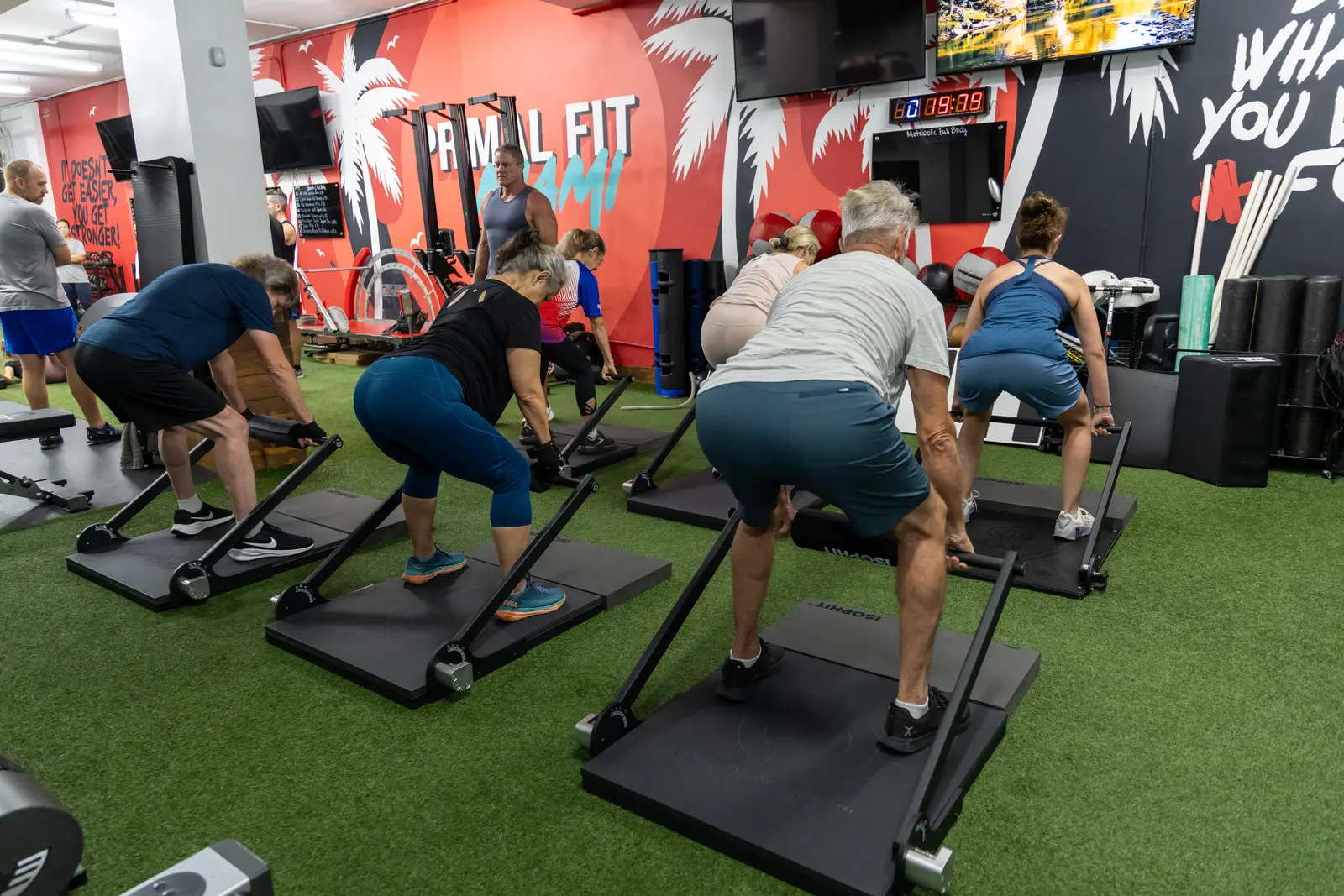
Coach-led ISOPHIT strength training at Primal Fit Miami uses controlled positions and individualized effort.
By Matt Pack, Founder and Head Coach of Primal Fit Miami
Nearly half of U.S. adults have high blood pressure.[1] Most people have heard the familiar advice: walk more, improve their diet, reach a healthier weight, and take medication when a healthcare professional recommends it. Those steps still matter. But another form of exercise deserves a place in the conversation: isometric strength training.
Research suggests that regular, structured isometric exercise can reduce resting blood pressure in some people. In one major analysis, it produced the largest average decrease among the exercise categories studied.[2] That does not make isometrics a replacement for cardio, medication, or medical care. It does make them a useful option to understand.
The short answer: Yes, isometric exercise may help lower resting blood pressure. The size of the effect varies, the research has limitations, and the right exercise intensity depends on the individual. For anyone with hypertension or cardiovascular disease, training should complement an appropriate medical plan.
Video transcript
Coach: Beautiful. Locking in. Max pressure. Keep that breath.
What Is Isometric Exercise?
Isometric exercise is strength training in which your muscles produce force while the working joint stays relatively still. Instead of repeatedly lifting and lowering a weight, you hold a controlled position or press or pull against fixed resistance.
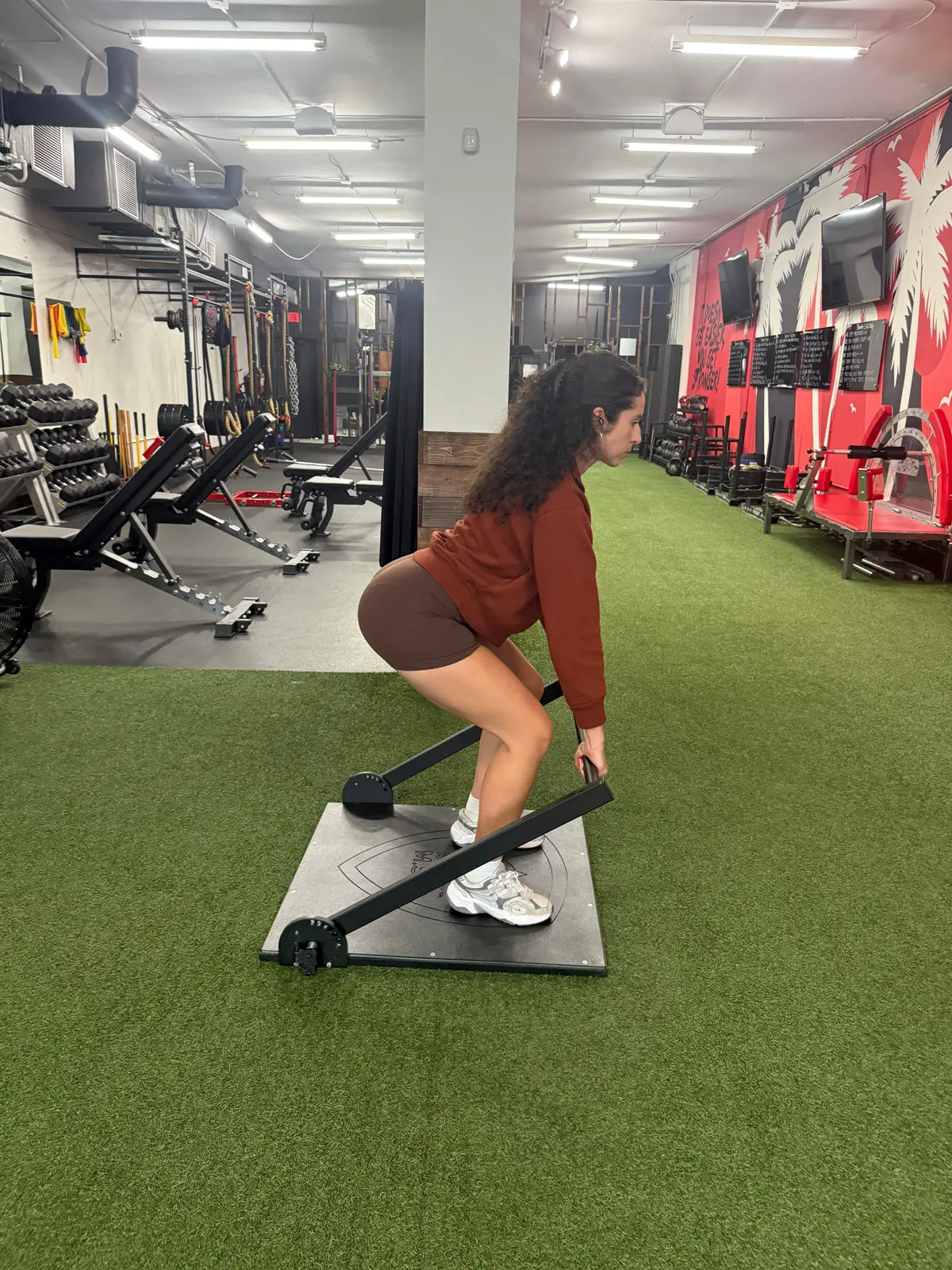
A wall sit and an isometric handgrip are familiar examples. With the ISOPHIT system used at Primal Fit Miami, a participant produces force against fixed resistance while a coach manages position, effort, duration, breathing, and progression.
Simple does not mean easy. An isometric contraction can create substantial muscular effort. The useful feature is control: the exercise can be adjusted without depending on repeated joint movement. For a broader introduction, see our guide to isometric strength training for adults 50+.
What Did the 2023 Blood-Pressure Study Find?
A 2023 systematic review and network meta-analysis published in the British Journal of Sports Medicine examined 270 randomized controlled trials with 15,827 participants.[2] The researchers compared several exercise categories and found that all five were associated with lower resting systolic and diastolic blood pressure.
In the pairwise analysis, the average reductions were:
| Exercise category | Systolic | Diastolic |
|---|---|---|
| Aerobic exercise | 4.49 mm Hg | 2.53 mm Hg |
| Dynamic resistance training | 4.55 mm Hg | 3.04 mm Hg |
| Combined training | 6.04 mm Hg | 2.54 mm Hg |
| High-intensity interval training | 4.08 mm Hg | 2.50 mm Hg |
| Isometric exercise training | 8.24 mm Hg | 4.00 mm Hg |
Source: Edwards et al., 2023. Values are average resting blood-pressure changes in the pairwise analysis, rounded as reported by the authors.
Isometric training showed an average reduction of 8.24 mm Hg systolic and 4.00 mm Hg diastolic. It was the largest average decrease among the five broad exercise categories in this analysis.
What Those Numbers Do and Do Not Mean
The result is promising, but it needs context.
- The 270 trials covered all exercise categories. They were not 270 trials of isometric exercise alone.
- The studies differed in participant health, starting blood pressure, exercise protocol, and duration. A network meta-analysis also combines direct and indirect comparisons between interventions.
- Much of the isometric blood-pressure literature has studied specific protocols such as handgrip exercise and wall squats. The result should not be applied automatically to every static hold, every strength program, or every person.
- An average is not a promise. Some people may experience a larger change, a smaller change, or no meaningful change.
- The study evaluated exercise categories. It did not test Prime Strength 30™, Primal Fit Miami, or the ISOPHIT program used here.
The broader evidence has continued to earn attention. The 2025 American Heart Association and American College of Cardiology guideline includes static or isometric resistance training among the structured exercise approaches that appear effective for lowering blood pressure in adults with or without hypertension.[3] It also continues to support aerobic and dynamic resistance exercise. In other words, this is not an argument to stop walking or abandon traditional strength training.
Should You Replace Cardio With Isometrics?
No. The practical takeaway is addition, not replacement.
Aerobic exercise, dynamic resistance training, and isometric work each offer different advantages.[4] Your overall program should reflect your health, goals, experience, preferences, and ability to recover. For blood-pressure management, exercise also sits alongside sleep, nutrition, weight management when appropriate, medication, and regular medical care.
A form of exercise only helps if you can perform it appropriately and continue doing it. That is one reason I care so much about efficient, coached training. Consistency usually beats the theoretically perfect plan that never becomes part of your life.
Why Coaching Matters When You Have High Blood Pressure
Isometric exercise is controlled, but it is not automatically gentle or risk-free. Muscular effort can temporarily raise blood pressure during a contraction, especially when someone strains or holds their breath. Exercise position, intensity, work duration, rest, and breathing all matter.
If you have diagnosed hypertension, cardiovascular disease, recent surgery, symptoms, or exercise restrictions, talk with your healthcare professional before starting a new program or increasing intensity. A coach can then help translate appropriate guidance into exercise selection and progression, but coaching is not medical treatment.
Why We Built Prime Strength 30™
The blood-pressure research is one of the reasons we created Prime Strength 30™ at Primal Fit Miami. It is not the only reason.
Prime Strength 30™ is our proprietary 12-week strength program for adults 50+. Sessions are 30 minutes, coach-led, and completed in small groups capped at five. We use ISOPHIT isometric strength-training technology so participants can produce meaningful force in controlled positions, with individual coaching and progression. You can learn how Prime Strength 30™ works on the program page.
We built it for adults who want to get stronger, improve stability, move with more confidence, and maintain the physical capacity that supports daily life. That might mean climbing stairs, carrying groceries, traveling, getting up from the floor, or simply trusting your body to do what you ask of it.
Prime Strength 30™ also begins with a baseline and ends with appropriate retesting. Depending on the individual, measurements may include grip strength, sit-to-stand performance, balance, mobility, body composition, and ISOPHIT force production. These are fitness and wellness measures, not medical diagnoses.
For a broader starting snapshot, the Primal Longevity Assessment™ includes a resting blood-pressure reading alongside body composition, grip strength, balance, isometric force, and six-minute bike performance. One blood-pressure reading cannot diagnose hypertension, and questions about a concerning result belong with a qualified healthcare professional.
For adults in Miami Shores and nearby communities who want a coached introduction to isometric strength training, Prime Strength 30™ provides a structured place to begin.
A Stronger Way Forward for Adults 50+
Getting older is not the problem. Losing strength, confidence, and capability without doing anything about it is the problem.
If high-impact classes, traditional boot camps, or long workouts no longer fit what your body or schedule needs, you still have options. You can train hard with more control. You can pursue measurable progress without turning every session into punishment. And you can build strength for the life you want to keep living.
Get started. Curious whether Prime Strength 30™ fits your goals? Schedule a 60-minute consultation with Primal Fit Miami. We will discuss your training history, current ability, and the right next step. If you have hypertension, cardiovascular disease, recent surgery, or exercise restrictions, speak with your healthcare professional before beginning.
Schedule Your 60-Minute Consultation Explore Prime Strength 30™
Frequently Asked Questions
Can isometric exercise lower blood pressure?
Research suggests that regular, structured isometric training can reduce resting blood pressure in some people. A 2023 analysis reported an average reduction of 8.24 mm Hg systolic and 4.00 mm Hg diastolic, but individual results vary and the evidence should not be treated as a guarantee.
What type of isometric exercise has been studied for blood pressure?
Common research protocols have included isometric handgrip exercise and wall squats. The 2023 analysis ranked the wall squat highly for systolic blood-pressure reduction, but study designs and participants varied. That finding does not establish one universally best exercise for every person.
Is isometric exercise safe if I have hypertension?
It may be appropriate for many people, but the answer depends on blood-pressure control, cardiovascular history, symptoms, medication, and intended intensity. Speak with your healthcare professional before beginning if you have hypertension or cardiovascular disease, and avoid holding your breath while exerting force.
Can isometric exercise replace blood-pressure medication or cardio?
No. Exercise should not replace prescribed medication or appropriate medical care. Isometric work can be one part of a broader plan that may also include aerobic exercise, dynamic resistance training, nutrition, sleep, and other clinician-recommended steps.
Is Prime Strength 30™ a treatment for high blood pressure?
No. Prime Strength 30™ is a coached fitness program for adults 50+, not a hypertension treatment or clinical rehabilitation program. The program uses isometric strength training, but it has not been presented as a clinical trial and should not be expected to reproduce a study average.
Looking for more strength and longevity articles? Start with strength and longevity after 50.
Research and References
- Centers for Disease Control and Prevention. High Blood Pressure Facts. View facts
- Edwards JJ, et al. Exercise training and resting blood pressure: a large-scale pairwise and network meta-analysis of randomised controlled trials. British Journal of Sports Medicine. 2023. View study
- American Heart Association and American College of Cardiology. 2025 Guideline for the Prevention, Detection, Evaluation, and Management of High Blood Pressure in Adults. Circulation. 2025. View guideline
- American Heart Association. Getting Active to Control High Blood Pressure. View guidance
This article is general fitness information, not medical advice. Prime Strength 30™ is a fitness program, not medical care or physical therapy. Individual results vary.
Train with Miami's most trusted gym
Book a free consultation - we'll build the right plan for you.