
Can Strength Training Build Resilience? The Value of Chosen Challenge
By Matt Pack · August 26, 2026
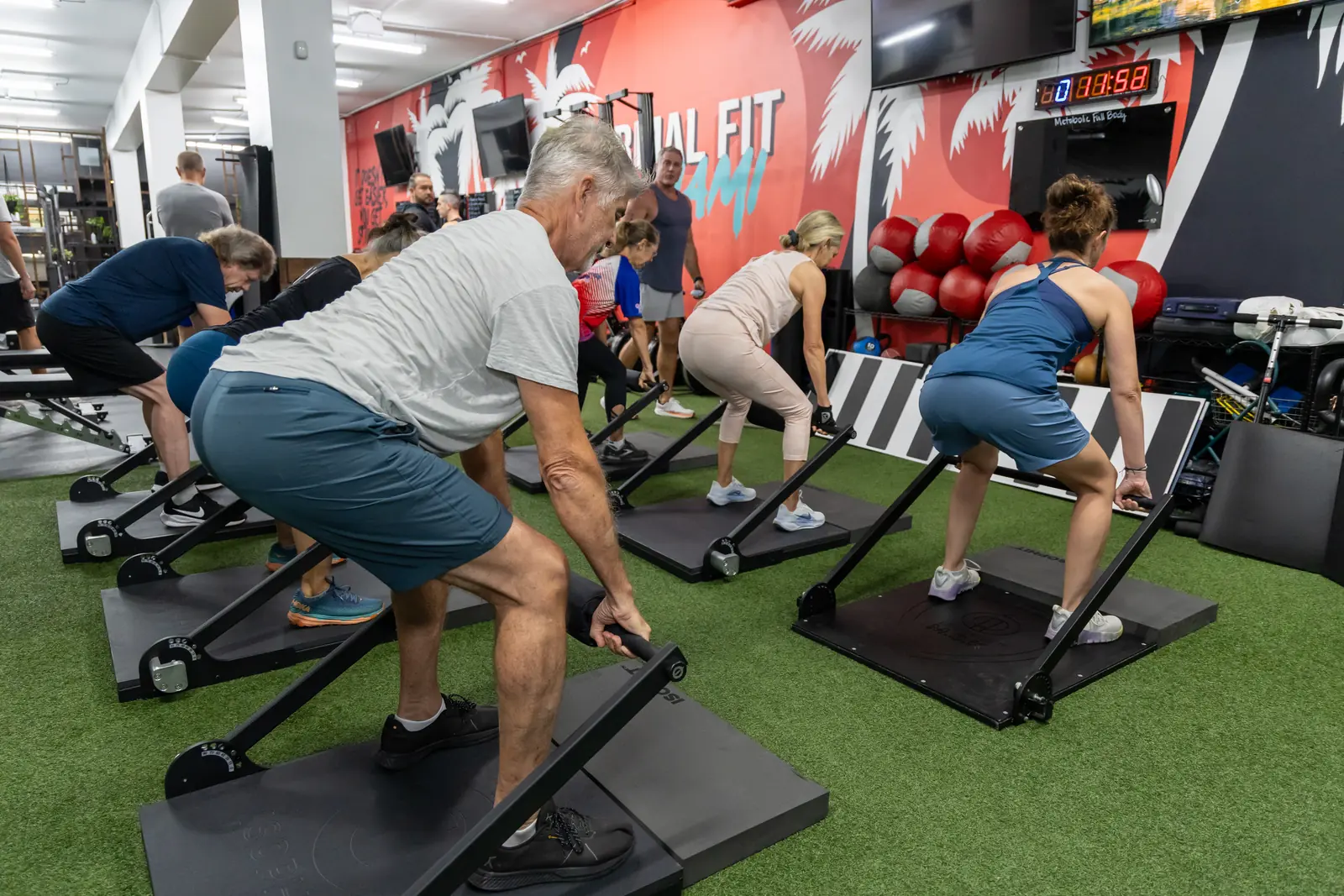
Strength training can help build confidence and exercise self-efficacy by giving you repeated evidence that you can learn, adapt and complete difficult work. It does not make anyone immune to stress, loss or adversity, and the hardest workout is not automatically the best one. The value comes from choosing an appropriate challenge, meeting it with focus and recovering well enough to build on it.
I think of that process as synthetic struggle: difficulty you choose before life chooses difficulty for you. It is a coaching phrase, not a clinical term. For me, it describes one of the reasons training can matter beyond muscle and body composition.
A productive workout asks something of you. It may require patience, discipline, composure or the willingness to continue after the novelty wears off. Over time, those experiences can change the way you see your own capability.
Why Do People Choose Challenging Workouts?
Not everyone comes to the gym looking for the easiest possible hour. Many people want a meaningful test. They want to concentrate, produce effort and finish something that felt uncertain when it began.
The result is not only a stronger muscle. It can also be a mastery experience: a specific piece of evidence that says, "I did something difficult, and I handled it." In psychology, self-efficacy refers to belief in your ability to perform a task or influence an outcome. Research consistently identifies exercise self-efficacy as an important part of physical-activity participation, although it should not be confused with a guarantee of broader mental health or resilience.[1][2]
That distinction matters. A hard set cannot prepare you for every difficult event in life. It can give you practice approaching a controlled challenge, following a plan and discovering that your capacity may be greater than you assumed.
What Is "Synthetic Struggle"?
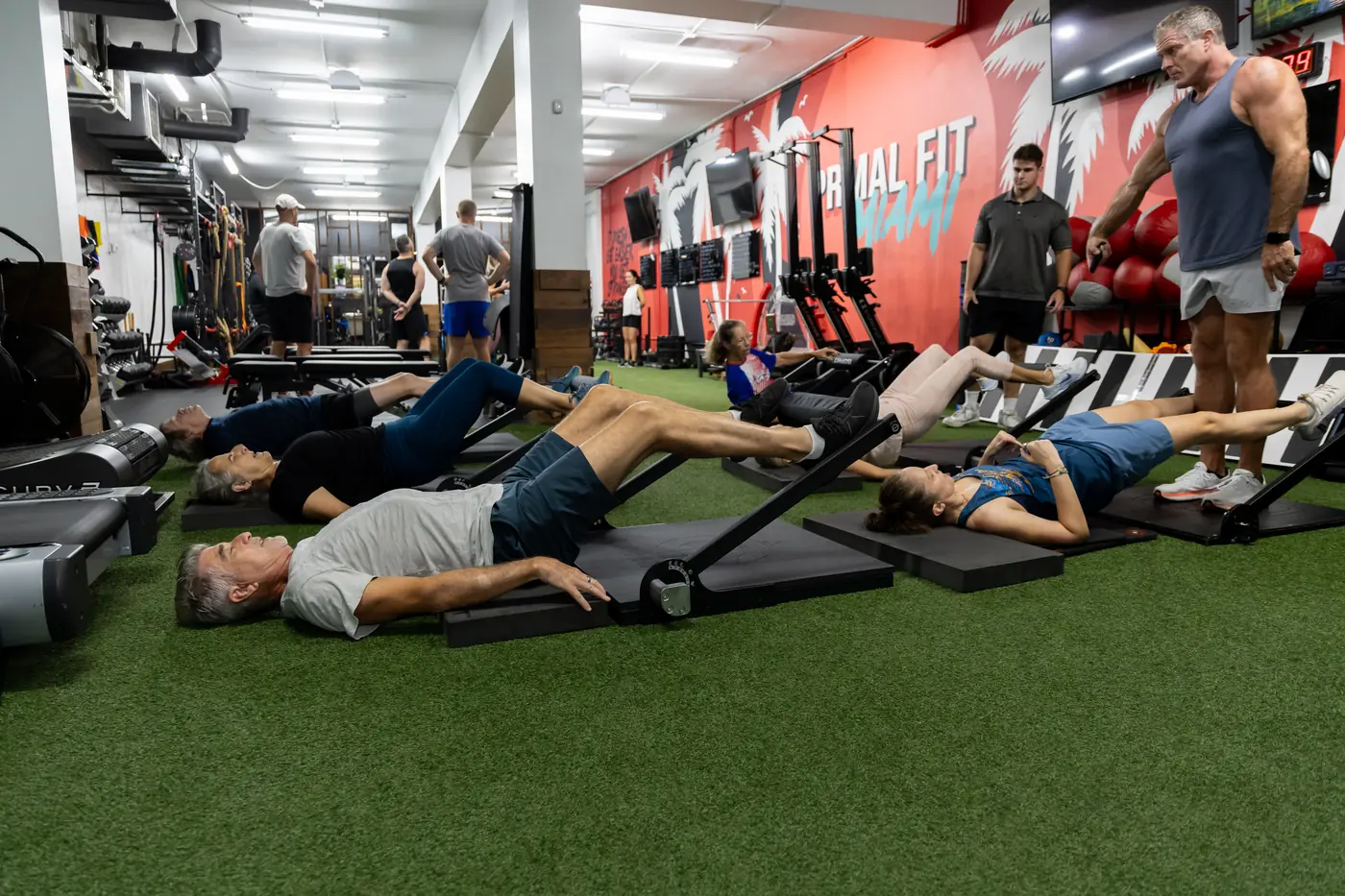
Synthetic struggle is my name for a difficult but controlled task that you choose for a useful reason. In training, that could mean completing a demanding isometric effort, learning a new movement, adding resistance gradually or staying technically sound when fatigue begins to rise.
The word "chosen" is important. Good training preserves agency. The challenge is scaled to the person, the goal is clear and the coach can adjust the task. You are not being punished. You are practicing a skill and building capacity.
The struggle is also bounded. A set ends. Rest follows. The training plan accounts for recovery. That structure is what separates purposeful difficulty from random suffering.
Hard Training Should Be Productive, Not Punishing
The fitness industry often treats sweat, soreness and exhaustion as proof that a workout worked. They are not reliable measures of quality by themselves. A session can feel difficult and still be poorly designed. It can also look controlled and produce an excellent training stimulus.
Productive challenge has several characteristics:
- It serves a specific physical or technical goal.
- It matches the person's current ability and health considerations.
- Technique and position remain controlled.
- The effort is demanding but recoverable.
- Progression occurs over time rather than through constant testing.
- The person can return and train consistently.
Pain, dizziness, unusual symptoms or loss of control are not badges of toughness. They are reasons to stop, reassess and seek appropriate guidance. Choosing challenge does not mean ignoring information from your body.
A Five-Part Test for Productive Difficulty
Before calling a workout "hard," ask whether it passes these five tests:
- Purpose: What quality are we trying to improve?
- Scale: Does the challenge fit the person performing it?
- Control: Can the person maintain the intended position and technique?
- Recovery: Can they recover and train productively again?
- Progression: Is there a sensible next step rather than another random maximum?
If the only answer is "it was exhausting," the training needs a better reason.
Why Isometric Training Creates an Honest Challenge
Isometric training is one useful example of chosen challenge. During an isometric exercise, the muscles produce force while the working joint remains relatively still. With fixed resistance, there is no weight traveling through a repeated lifting and lowering cycle. The athlete or participant creates muscular effort against the resistance. We explain how isometric exercise builds strength in more detail in a separate article.
That does not mean effort is the only variable. A coach also selects the position, duration, intent, rest period and progression. Maximum effort is not required in every session. The dose should reflect the person's training history, readiness and goal.[5]
As someone becomes stronger, an isometric exercise can remain challenging because that person may be able to produce more force or perform a more demanding progression. But greater effort does not guarantee greater adaptation. Results still depend on appropriate programming, recovery and consistency.
What I like about the method is its clarity. You can focus on creating force, maintaining position and staying engaged for a defined period. The task is simple to understand, but it can be deeply demanding when coached well.
Training Hard After 50 Should Look Intelligent
Adults in their 50s, 60s and 70s do not need to be protected from every difficult effort. They do need training that respects their starting point, experience, recovery, health history and goals.
Challenge is relative. A demanding session for one person may be inappropriate or too easy for another. The coaching job is to find the level that asks for real effort without making exhaustion the objective.
Research shows that adults well into later life can improve strength through resistance training.[4] The practical question is not whether an older adult is allowed to work hard. It is how to create a challenge they can perform well, recover from and repeat consistently.
Recovery Is Part of Doing Hard Things
Chosen challenge only works when it is paired with chosen recovery. Sleep, nutrition, lower-intensity movement and appropriate rest are not signs that the standard has dropped. They allow the body to adapt to the work.
This is especially important when life is already demanding. Work stress, poor sleep, aggressive dieting and high training volume all contribute to the total stress and recovery load a person is carrying. Sometimes the disciplined choice is to push. Sometimes it is to adjust the session so you can keep progressing.
Resilience is not never needing recovery. It is responding to the information in front of you and continuing with a better plan.
How Prime Strength 30™ Applies the Idea
Prime Strength 30™ is Primal Fit Miami's 12-week, coach-led ISOPHIT strength program for adults 50+. The sessions use controlled isometric positions, individualized effort and measurable progression in small groups capped at five.
The goal is not to make every session a test of survival. It is to create focused, scalable strength work that meets the person in front of us. One participant may be returning after years away from exercise. Another may have trained for decades. Both can encounter meaningful challenge without competing with each other.
That is the form of synthetic struggle I value: chosen, coached and connected to a purpose.
Do Hard Things, but Choose the Right Hard Thing
A good training program does not make life easy. It helps you become more capable. The physical changes matter, but so does the evidence you collect along the way: you can learn, you can adapt and you can complete work that once felt beyond you.
The goal is not to make the hill smaller. It is also not to sprint up every hill until you collapse. The goal is to build the strength, judgment and confidence to meet the next challenge well.
If you are 50+ and want a coach-led way to build strength through focused, measurable effort, learn more about Prime Strength 30™ at Primal Fit Miami. Start with a consultation so the team can understand your goals and determine the right training path.
Learn More About Prime Strength 30™ Get Started
Frequently Asked Questions
Can strength training build mental resilience?
Strength training can provide mastery experiences that support confidence and exercise self-efficacy. Research also links physical activity, self-efficacy and aspects of wellbeing. That does not prove that workouts make someone resilient to every life event or replace mental-health care.
Do workouts need to be hard to be effective?
Training needs an appropriate stimulus, but it does not need to be maximal or exhausting every time. Exercise selection, technique, volume, effort, progression, recovery and consistency all influence results.
What does synthetic struggle mean?
Synthetic struggle is Matt Pack's coaching phrase for a controlled challenge that someone chooses for a useful reason. It is not a clinical diagnosis or established scientific training category.
Can adults over 50 still train hard?
Many adults over 50 can train with meaningful intensity. The challenge should reflect the person's current ability, health history, recovery and goals. Medical conditions or exercise restrictions should be discussed with an appropriate healthcare professional.
How do I know whether I am pushing too hard?
A productive session should preserve control and allow recovery. Repeated performance decline, disrupted sleep, persistent soreness, pain, dizziness or unusual symptoms are reasons to reassess the plan and seek appropriate guidance.
Research References
- Williams SL, et al. Behavior change techniques associated with changes in self-efficacy for physical activity: a systematic review with meta-analysis. Annals of Behavioral Medicine. 2019. View study
- Hassan I, et al. Physical fitness, exercise self-efficacy, and quality of life in adulthood: a systematic review. International Journal of Environmental Research and Public Health. 2020. View study
- Liu S, et al. The mediating effect of resilience and self-efficacy between physical activity and wellbeing: a meta-analytic structural equation model. 2025. View study
- Grgic J, et al. Effects of resistance training on muscle size and strength in very elderly adults: a systematic review and meta-analysis. Sports Medicine. 2020. View study
- Oranchuk DJ, et al. Isometric training and long-term adaptations: effects of muscle length, intensity, and intent. Scandinavian Journal of Medicine & Science in Sports. 2019. View study
This article is general fitness information, not medical advice or mental-health care. Individual results vary.
Train with Miami's most trusted gym
Book a free consultation - we'll build the right plan for you.