
Using a GLP-1? Here’s How to Lose Fat Without Losing Muscle
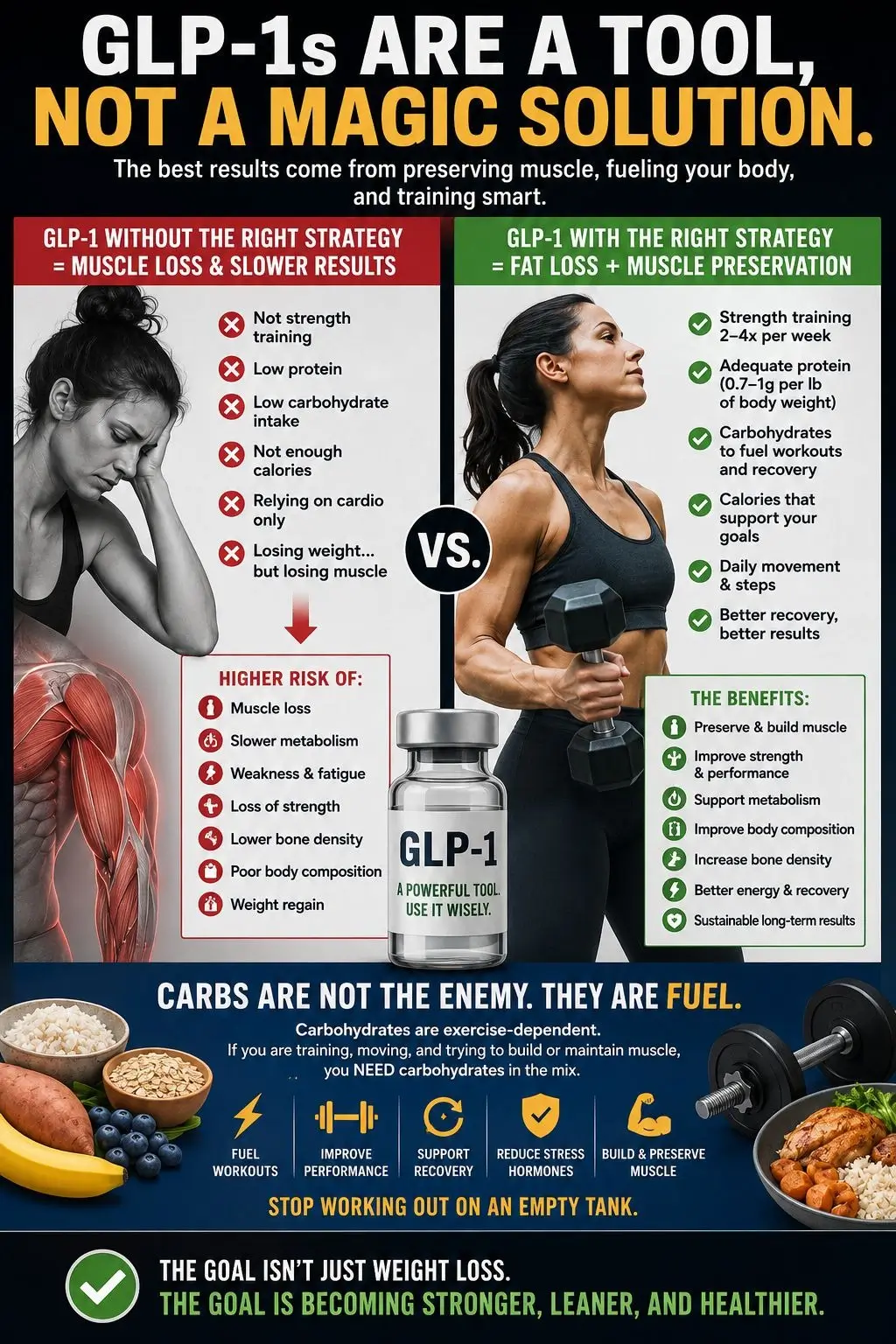
If you’re using a GLP-1 medication, the goal should not be to lose as much weight as possible as fast as possible. The better goal is to lose fat while protecting muscle, strength, energy, and long-term metabolic health. That usually means combining your medication plan with strength training, enough protein, daily movement, recovery, and carbohydrate intake that matches your activity level.
GLP-1s can be useful tools, but they are not magic. They do not replace coaching, resistance training, or smart nutrition. For many adults, especially busy professionals and parents in Miami Shores and nearby neighborhoods, the best results come from using these medications as part of a complete plan, not as a shortcut.
GLP-1s Can Help With Weight Loss, But Weight Loss Is Not the Whole Story
GLP-1 medications can help reduce appetite and make it easier to maintain a calorie deficit. That can be helpful for people who have struggled with hunger, overeating, inconsistent habits, or weight regain.
But the scale does not tell you what kind of weight you are losing.
When people lose weight, they often lose a mix of body fat, water, and lean mass. Lean mass includes muscle tissue, and preserving it matters. Muscle supports strength, movement quality, physical function, and metabolic health. It also helps you stay more capable, resilient, and active as you get older.
That is why the real goal is not just getting lighter. It is improving body composition in a way that helps you feel, move, and function better.
Why Muscle Matters So Much During Fat Loss
Muscle does a lot more than change how your body looks. It supports many of the outcomes people actually want from a fitness and health plan:
- Better strength for everyday life
- Better training performance
- Better insulin sensitivity
- Better posture and movement control
- More support for healthy aging
- More confidence in your body
- Better odds of maintaining results over time
If fat loss comes with too much muscle loss, people often end up feeling weaker, flatter, more fatigued, and less capable in the gym. That is not a win.
One of the Biggest GLP-1 Mistakes: Losing Weight Without a Muscle-Preservation Plan
One of the biggest issues we see is people taking a GLP-1 without changing how they train or eat.
- They eat far too little.
- They avoid resistance training.
- They rely on random cardio.
- They under-eat protein.
- They assume carbs are the enemy.
- They try to get by on caffeine, a shake, and willpower.
That approach can make weight loss look successful on paper while setting up problems in real life. Energy drops. Workouts suffer. Recovery suffers. Strength slips. Consistency gets harder.
A better approach is to ask a different question:
How do I help my body lose fat while keeping as much muscle, strength, and performance as possible?
Strength Training Needs to Be Part of the Plan
If you are using a GLP-1 and want better long-term results, strength training should be a priority.
Resistance training gives your body a reason to hold on to muscle while you are in a calorie deficit. It also helps support strength, joint function, posture, and confidence. For many adults over 30, especially those returning to exercise after time away, it is one of the most important parts of a sustainable plan.
This does not mean you need punishing workouts or a hardcore gym environment. It means you need a structured program, proper coaching, and progressive training that matches your current fitness level, movement quality, and recovery capacity.
That is especially important for people in Miami Shores, El Portal, Biscayne Park, and nearby areas who are juggling work, commuting, family responsibilities, and inconsistent schedules. You need training that is effective and realistic, not extreme.
Protein Helps Protect Lean Mass During Weight Loss
Protein matters even more when appetite is lower and total calories are down.
When fat loss is the goal, adequate protein intake helps support muscle retention, recovery, and satiety. It is one of the simplest ways to improve the quality of your results. If someone is on a GLP-1 and barely eating, protein often becomes even harder to hit consistently, which is part of the problem.
This is one reason generic dieting advice often falls apart. If your appetite is suppressed, you need to be more intentional, not less.
For many people, that means building meals around a quality protein source first, then adding produce, fiber-rich carbs, and healthy fats in portions that fit the plan. The exact amount should be individualized, especially if you have a medical condition or specific dietary considerations.
Carbohydrates Are Not the Enemy, Especially If You Train
This is where a lot of confusion shows up.
Some people hear that GLP-1s are used in diabetes and blood sugar management, then assume they need to fear carbohydrates completely. That is too simplistic.
Carbohydrate needs depend heavily on activity level, training volume, and the rest of the diet.
If you are sedentary, under-muscled, and living on ultra-processed food, that is one conversation.
If you are strength training, walking daily, trying to recover well, and working to preserve muscle while losing fat, carbohydrates can be helpful. They support training performance, recovery, and muscle glycogen. In practical terms, that can mean better workouts, better effort, and a better chance of holding on to strength and lean mass.
Carbs are not automatically good or bad. They are a tool. The key is using the right amount for your body, your goals, and your activity level.
Low Energy Workouts Usually Lead to Lower Quality Results
You cannot expect high-quality training from an under-fueled body.
When people try to work out on extremely low calories, protein shakes alone, or a near-zero-carb intake that does not match their activity, performance often suffers. They feel flat, weak, and exhausted. Training quality drops. Recovery gets harder. Progress becomes harder to sustain.
That does not mean everyone needs a high-carb diet. It means your fueling strategy should support the work you are asking your body to do.
If you want to train well enough to keep muscle, your nutrition has to help you do that.
The Smartest Long-Term GLP-1 Strategy
The strongest long-term strategy is not starvation. It is support.
A better GLP-1 plan usually includes:
- Strength training several times per week
- Adequate daily protein
- Consistent walking and general movement
- Sleep and recovery habits that support training
- Carbohydrate intake matched to activity and tolerance
- Ongoing coaching and adjustment as your body changes
This is the difference between chasing scale loss and building a body that functions better.
What We Want Clients to Remember
The goal is not just to weigh less.
The goal is to become stronger, leaner, healthier, and more resilient while losing fat.
- That means protecting muscle.
- That means fueling intelligently.
- That means training with purpose.
- That means avoiding the all-or-nothing mindset that leaves people burned out and disappointed.
GLP-1s can absolutely be part of a successful plan. But they work best when they are paired with the habits that support long-term results.
FAQ
Yes, it is possible to lose some lean mass during any weight-loss phase, including while using a GLP-1. That is one reason strength training, protein intake, and smart recovery matter so much.
For most people, yes, if their doctor has cleared them for exercise. Strength training helps support muscle retention, strength, function, and better overall body composition during fat loss.
Many active people do better with some carbohydrate intake, especially if they are lifting weights, walking regularly, or doing other structured exercise. The right amount depends on the person, their activity, and their overall nutrition plan.
Cardio can support health and calorie expenditure, but it is usually not enough on its own if muscle retention is the goal. Resistance training is a more direct tool for helping your body keep muscle while losing fat.
The best plan is individualized, but it often includes strength training, walking, mobility work, and enough recovery to stay consistent. The most effective plan is the one you can sustain and progress over time.
Yes. Medication, nutrition, and exercise should work together. If you are taking a GLP-1, it is smart to coordinate with your prescribing clinician, especially if you have diabetes, a history of low blood sugar, digestive side effects, or other medical concerns.